
Explainer: What is BRICS? How was the group of 11 powerful nations formed?
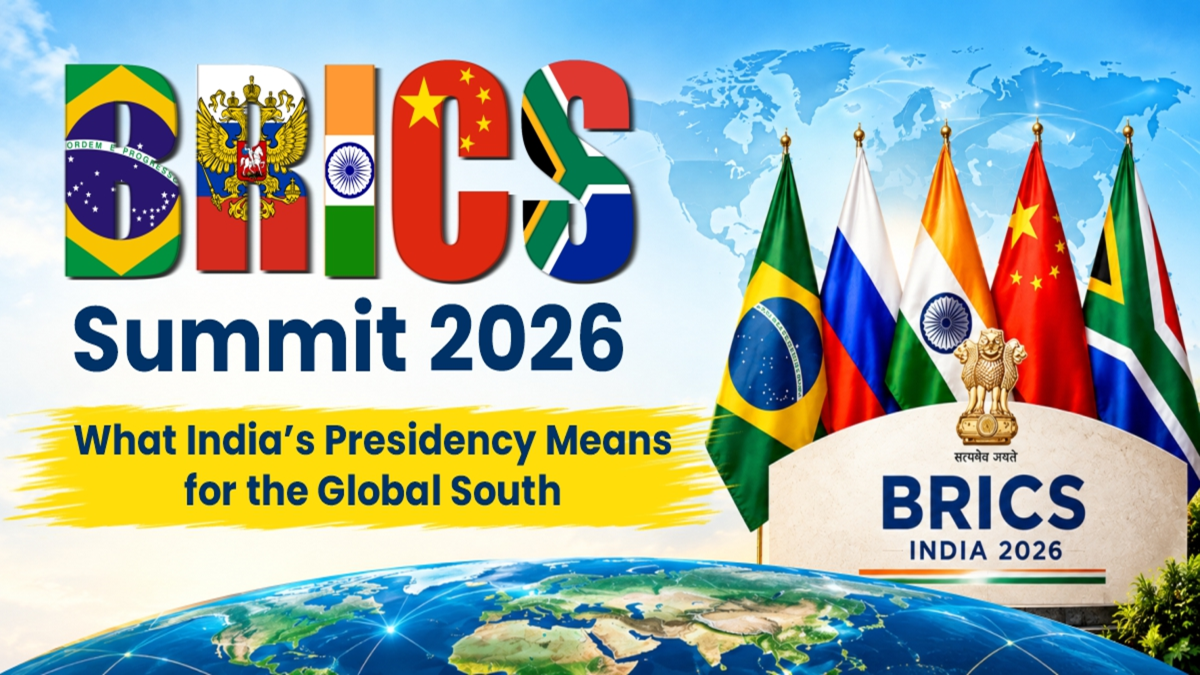
BRICS Summit 2026: All eyes are on India this time, as the 18th BRICS Summit is set to be held at Bharat Mandapam in New Delhi on September 12 and 13, 2026. India is assuming the BRICS presidency for the fourth time this year, and numerous world leaders are expected to participate in the summit. Today, BRICS is a constant topic of discussion in global politics and economics. It is not merely a group of a few nations but a partnership of emerging economies seeking to establish a strong voice in global decision-making.
BRICS began with just four nations, but today it has expanded into a major group comprising 11 member countries. This group represents nearly half of the world's population and a significant portion of the global economy. Let us explore what BRICS is, how it originated, which countries are included, and how it grew to encompass 11 nations over time.
What is BRICS and what is its objective?
BRICS is an international group of the world's emerging economies. Its primary objective is to foster cooperation among member nations in areas such as trade, investment, development, technology, energy, finance, and global issues. While it is not a formal international institution, its member countries collaborate to formulate shared strategies on critical global matters. BRICS is often referred to as a powerful voice for the 'Global South'—representing developing and emerging nations. The group advocates for increased participation of developing countries in global institutions.
How did the name 'BRIC' originate?
The story of BRICS began not with a meeting, but with a research report. In 2001, British economist Jim O’Neill identified Brazil, Russia, India, and China as the fastest-growing economies of the future in a report. He coined the acronym 'BRIC' using the first letters of these four countries' names. At that time, BRIC was merely an economic concept. Jim O’Neill believed that these nations would become significant components of the global economy in the coming years and play an increasingly important role in shaping global economic policy.
The Journey from BRIC to BRICS
The first meeting of foreign ministers from BRIC nations took place in New York in 2006, on the sidelines of the United Nations General Assembly (UNGA). This marked the beginning of the group's formalization. Subsequently, the inaugural BRIC summit was held in 2009 in the Russian city of Yekaterinburg; this was the group's first official summit. South Africa joined the group in 2010, leading to the name being changed from BRIC to BRICS.
When and How Did BRICS Expand?
For nearly 14 years, BRICS consisted of only five nations: Brazil, Russia, India, China, and South Africa. However, the group underwent its most significant expansion in 2024. Five new countries were inducted as members effective January 1, 2024. These new members include Egypt, Ethiopia, Iran, Saudi Arabia, and the United Arab Emirates. Subsequently, in 2025, Indonesia also became a full member of BRICS. Thus, BRICS has now evolved into a group of 11 nations.
Which Countries Are BRICS Partner Nations?
In addition to full member states, BRICS has 10 partner nations. These countries are invited to attend meetings and specific events. While they can endorse various declarations and documents, they do not possess the same decision-making authority as full members. The partner nations include Belarus, Bolivia, Cuba, Kazakhstan, Malaysia, Nigeria, Thailand, Uganda, Uzbekistan, and Vietnam.
Why Is BRICS Considered So Important for the World? The significance of BRICS is determined not merely by the number of member nations, but by their economic and demographic strength. Following its expansion, the BRICS bloc is home to approximately 49 percent of the global population. The group accounts for nearly 39 to 40 percent of the global GDP and holds a share of around 23 percent in international trade. For these reasons, BRICS is counted among the world's most influential emerging economic powers.
What is the difference between the G7 and BRICS?
BRICS is frequently compared to the G7 nations. The G7 comprises developed countries such as the United States, the United Kingdom, France, Germany, Italy, Japan, and Canada. In contrast, BRICS consists of developing and emerging economies. While BRICS represents nearly half of the global population, the combined population of G7 nations accounts for less than 10 percent of the world's total. The economic influence of BRICS is steadily growing, and this is considered its greatest strength.
What is India's role in BRICS?
India is a founding member of BRICS and has been part of the group since its inception. India has previously held the BRICS presidency in 2012, 2016, and 2021. Now, in 2026, India is hosting the BRICS summit for the fourth time. The theme of India's presidency is "Building for Resilience, Innovation, Cooperation, and Sustainability." During this period, India is emphasizing issues such as balanced trade among member nations, robust supply chains, digital cooperation, easy access to finance for small businesses, and sustainable development.
Why is the 2026 BRICS summit significant?
The 18th BRICS summit, to be held in New Delhi, is considered significant in many respects. It will see the participation of heads of state from BRICS member nations, as well as representatives from partner countries and other invited nations. Discussions at the summit will cover issues such as global governance, energy security, food security, trade, investment, technology, climate change, and regional conflicts.
What are the biggest challenges facing BRICS?
As BRICS has expanded, the challenges it faces have also grown. The group now includes countries with divergent interests on various issues. Member views do not always align on matters such as tensions in the Middle East, the Russia-Ukraine war, the global energy crisis, and relations with Western nations.
At the same time, India faces the challenge of maintaining a balance, given its strong ties with BRICS nations as well as with the United States and Gulf countries. In this context, India aims to ensure that BRICS remains a platform primarily for economic cooperation.
Disclaimer: This content has been sourced and edited from News18 Hindi. While we have made modifications for clarity and presentation, the original content belongs to its respective authors and website. We do not claim ownership of the content.
