
EAC-PM Report: Number of school-going children in India to decline; 20% drop projected in the primary age group by 2036
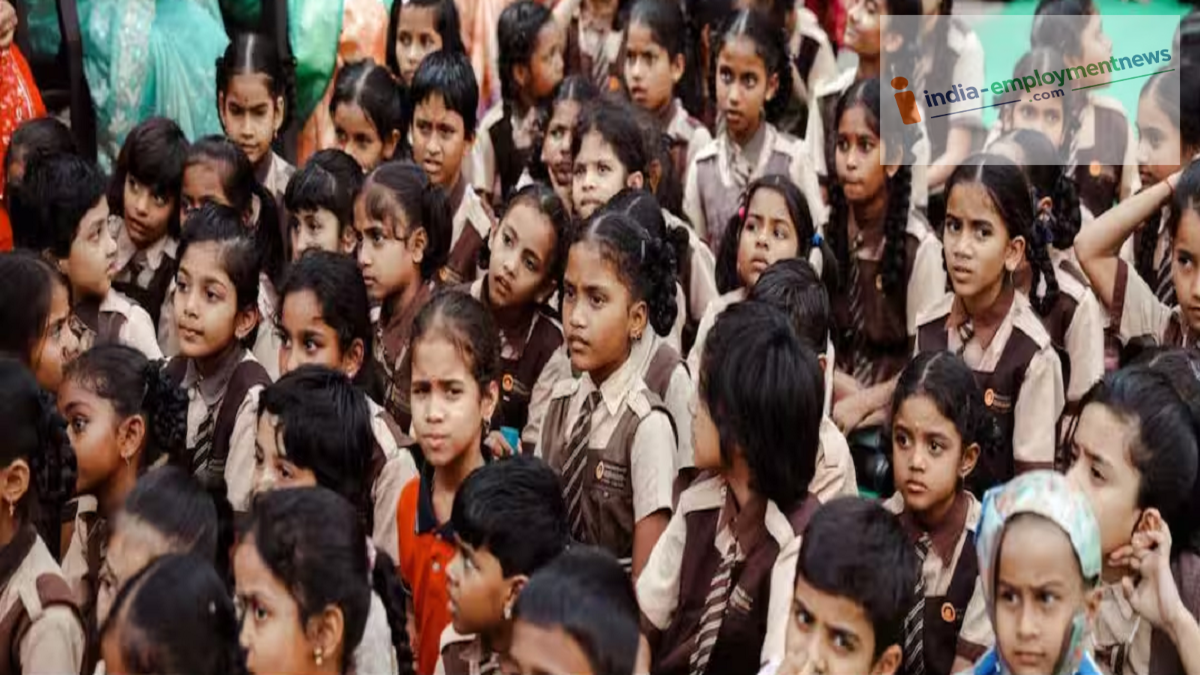
According to a new working paper released by the Economic Advisory Council to the Prime Minister (EAC-PM), the population of primary school-aged children (5–9 years) in India is projected to decline by approximately 20 percent between 2011 and 2036.
EAC-PM Report: A major shift may be on the horizon for primary education in India. A new working paper from the Economic Advisory Council to the Prime Minister (EAC-PM) estimates that the population of children aged 5–9—the primary school-going age—will fall by about 20 percent between 2011 and 2036. The research, titled "How India is Transforming Education Capacity under the New Education Policy 2020," was authored by Soumya Kanti Ghosh, Chief Economic Advisor at SBI and member of the EAC-PM, along with economist Shashidharan Sharma. According to the study, this decline in the number of children of primary school age serves as the first demographic evidence of India’s falling Total Fertility Rate (TFR).
Understanding the projected population decline through the data
Estimates prepared by the National Commission on Population, based on 2011 Census data, indicate that there were 125.3 million (12.53 crore) children aged 5–9 in 2011. This figure is projected to drop to 112.7 million (11.27 crore) by 2026—a decrease of approximately 10 percent compared to 2011. By 2036, the number is expected to fall further to 100.2 million (10.02 crore), representing a decline of nearly 20 percent relative to 2011. Citing data from the Office of the Registrar General and Census Commissioner, this research indicates that the country's fertility rate was 2.1 in 2019 and has since declined to 1.9 in 2024.
Demand for schools shifting toward urban areas
The report further notes that a decline in the child population at the national level does not imply a uniform drop in the demand for schools across the entire country. In fact, a significant shift in enrollment from rural to urban areas is being observed. Between 2012–13 and 2021–22, total enrollment in classes 1 through 12 in rural schools fell by approximately 7.8 million—from 187.1 million to 179.3 million. Conversely, during the same period, urban schools saw an addition of about 9.3 million students, raising their total enrollment to 76.4 million. Consequently, the urban share of total enrollment increased from 26.4 percent to 29.9 percent.
Variations in state-level data
The report also highlights significant disparities in state-level data. For instance, while total enrollment in Uttar Pradesh remained relatively stable, there was a decline of 1.946 million in rural enrollment, offset by an increase of 1.76 million in urban enrollment. In Bihar, both total enrollment and the number of schools increased, whereas in Tamil Nadu, total enrollment declined despite an increase in the number of schools.
Decline observed only in the number of primary schools
This demographic shift is directly impacting the country's school network. According to UDISE+ data, there were 1.551 million schools in the country in 2018–19; by 2025–26, this figure had fallen by 5.4 percent to 1.467 million. Meanwhile, the sharpest decline was recorded in the number of primary schools—those offering education only from classes 1 to 5. This figure fell by 12.6 percent, from 8.27 lakh to 7.22 lakh. In contrast, the number of schools providing education up to class 12 increased by 29.7 percent, rising from 1.30 lakh to 1.69 lakh. The report also clarifies that a decrease in the number of schools in the data does not necessarily mean that schools have shut down. In many instances, primary schools have been upgraded to include higher classes or have been merged with other institutions.
NEP 2020 and the Way Forward
To address the scarcity of resources in small schools with low student enrollment, the National Education Policy (NEP) 2020 proposes a 'school complex' or 'cluster' model. Under this framework, nearby small schools and *anganwadis* (early childhood care centers) can share resources—such as teachers, laboratories, playgrounds, and administrative leadership—without the need to close any school buildings. The authors of the research advise against the indiscriminate closure of schools in remote or rural areas based solely on national-level statistics. Instead, future planning should take into account local needs, the distance of schools from children's homes, and the capacity of neighboring schools.
