
DU UG Admission 2026: Admission to DU possible even without CUET UG scores; SOL and NCWEB to salvage the situation..
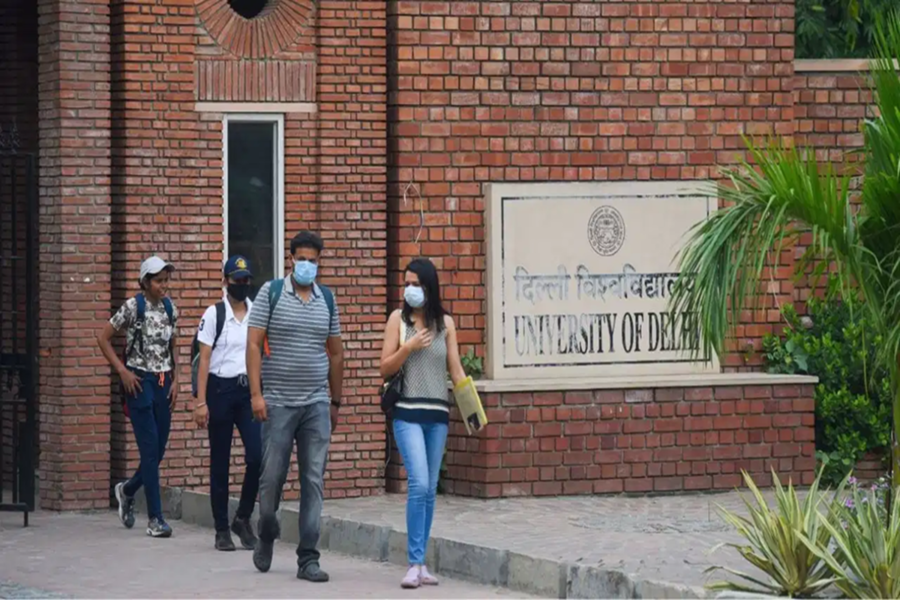
DU UG Admission 2026: The National Testing Agency (NTA) recently released the results for the Common University Entrance Test (CUET) UG 2026. Following this, Delhi University (DU) has launched its UG admission portal for 2026, and the registration process is now underway. However, the start of the registration process has brought anxiety for some candidates. While these candidates wish to secure admission to DU, they did not appear for the CUET UG 2026 exam. Additionally, some candidates took the exam but have low CUET UG scores. Consequently, these candidates fear their chances of securing admission to DU might be jeopardized. Yet, admission to DU remains a possibility for such candidates through DU’s SOL (School of Open Learning) and NCWEB (Non-Collegiate Women's Education Board); admission to DU is possible even without a CUET UG score.
Let us examine the matter in detail and understand how one can secure admission to DU without a CUET UG score. We will explore what DU’s SOL and NCWEB are and how admissions are conducted there.
**Only CUET UG 2026 Scores Will Be Valid**
DU has initiated the undergraduate admission process for the 2026-27 academic session. Registration has begun for a total of 72,000 undergraduate seats. Crucially, admission to these 72,000 seats will be granted solely based on CUET UG 2026 scores. Candidates who appeared for the CUET UG exam this year can apply for admission to DU based on their scores.
**Admission to DU Without CUET UG Scores**
While DU primarily grants admission based on CUET UG scores—and the registration process has been launched for this specific pathway—there are other avenues available. Generally, admission to undergraduate programs is not possible without a CUET-UG score; however, admission to DU's School of Open Learning (SOL) and Non-Collegiate Women's Education Board (NCWEB) is possible without it. Let us understand this in detail.
What is DU's NCWEB?
The Non-Collegiate Women's Education Board (NCWEB) was primarily established to provide higher education opportunities to female students residing in Delhi. For instance, female residents of Delhi who do not wish to enroll in regular colleges—or who are unable to secure admission there for any reason—can enroll in DU's NCWEB. NCWEB classes are held on Saturdays and Sundays within DU's regular colleges.
NCWEB's 27 Centers Across DU Colleges
DU's NCWEB admits female residents of Delhi. NCWEB follows the standard DU curriculum, and the degree is awarded by DU NCWEB. NCWEB operates a total of 27 centers within DU's regular colleges; 26 of these centers cater to undergraduate students, while one center is dedicated to postgraduate studies.
Unlimited Seats in NCWEB
Approximately 80 DU colleges offer admission to regular undergraduate courses. While these colleges often admit students beyond their classroom capacity, admission numbers at NCWEB are not capped; in fact, they are unlimited. The primary objective of NCWEB is to provide higher education opportunities to all female students in Delhi who have completed Class 12. Consequently, seats at NCWEB are unlimited, and admission can be secured without a CUET-UG score.
What is SOL, and how does admission work?
SOL—the School of Open Learning—operates under DU and admits students who do not enroll in regular colleges. SOL conducts its own application process for admissions. Applications can be submitted by visiting the official SOL website. Admission can be easily secured once the application process is complete; neither CUET scores nor high academic marks are required for this. A notable feature is that SOL awards a DU degree, although it specifies 'Open Learning' on the certificate. A four-year undergraduate program has also been introduced at SOL.
**Undergraduate Courses Offered at SOL**
DU SOL offers undergraduate courses such as BA, BA English (Honours), BA Political Science (Honours), B.Com (Programme), and B.Com (Honours). The curriculum is identical for both regular and distance learning students. With the implementation of the Choice-Based Credit System (CBCS), these courses are taught in both regular and distance modes. Most importantly, admission to these undergraduate courses does not require a CUET-UG score.
Disclaimer: This content has been sourced and edited from TV9. While we have made modifications for clarity and presentation, the original content belongs to its respective authors and website. We do not claim ownership of the content.
