
Degree vs. Skill: Rising demand for skills over degrees—what is changing in the job market?
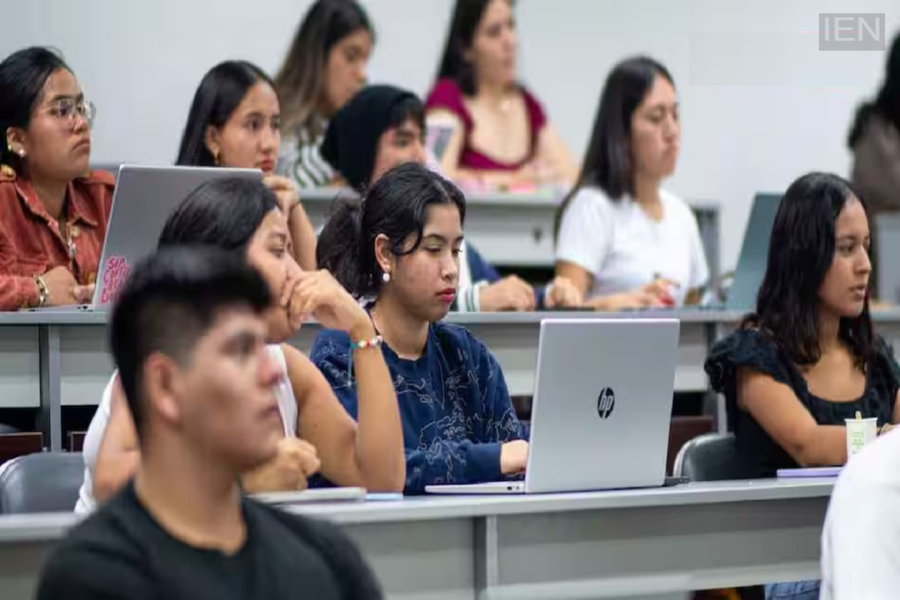
Degree vs. Skill: It is no longer just about which college a candidate attended; what matters more now is how well they can actually perform the job.
Degree vs. Skill: While securing a degree from a prestigious college was once considered the key to a good job, the employment landscape is changing rapidly. New technologies, Artificial Intelligence (AI), and evolving industry needs have transformed corporate hiring practices. Employers no longer focus solely on a candidate's alma mater; instead, they prioritize the candidate's actual ability to perform the job effectively. Consequently, companies today place greater emphasis on skills, project experience, and practical knowledge alongside academic degrees. Recent surveys and industry reports highlight this shift. Let us explore what is changing in the world of work.
What is changing in the job market?
According to hiring platforms and industry reports, approximately 80 percent of employers in India are adopting a "skills-first" hiring model. This means that a candidate's technical capabilities, practical skills, and experience are prioritized during recruitment, while the degree itself does not hold the same weight as it once did. Furthermore, a survey revealed that 82 percent of Indian professionals believe companies now value candidates with the right skills more than those with specific degrees. Simply completing one's education is no longer sufficient to land a job; acquiring relevant skills has become equally important. Many Indian companies are adopting hybrid evaluation models for recruitment in 2026. This model values both degrees and skills, though each plays a distinct role.
What does a degree prove?
A degree demonstrates that a candidate has completed their education at a recognized institution. It serves as evidence of their foundational knowledge, academic discipline, and capacity for sustained learning. For many companies, the degree remains a component of the initial screening process.
Why are skills becoming increasingly important?
In the final stages of recruitment, companies assess how well a candidate can actually perform the job. They look for candidates who possess the skills to handle the work effectively from day one. Consequently, the importance of technical proficiency, project experience, and practical knowledge is steadily rising.
What did the report reveal?
According to the 'India Employability Report 2026', approximately 68% of startups and Global Capability Centers (GCCs) in India have removed minimum CGPA requirements from their hiring processes. Instead, priority is now being given to skill-based assessments and tests. This means that good academic grades alone no longer guarantee a job; companies are focusing more on evaluating a candidate's actual skills.
Which skills are in highest demand?
Currently, companies prioritize candidates who possess technical skills in areas such as Artificial Intelligence (AI), data analytics, cybersecurity, digital marketing, cloud computing, and design. Simultaneously, there is a rapidly growing demand for knowledge regarding sustainability (ESG) and for soft skills such as communication, problem-solving, teamwork, and effective decision-making. In the evolving job market, candidates who combine technical knowledge with practical experience and strong soft skills enjoy greater employment opportunities.
