
CBSE OSM Controversy: 'Software Crashes, Blurred Answer Sheets, and Massive Backlogs'—Scanning Technician Makes Shocking Revelations
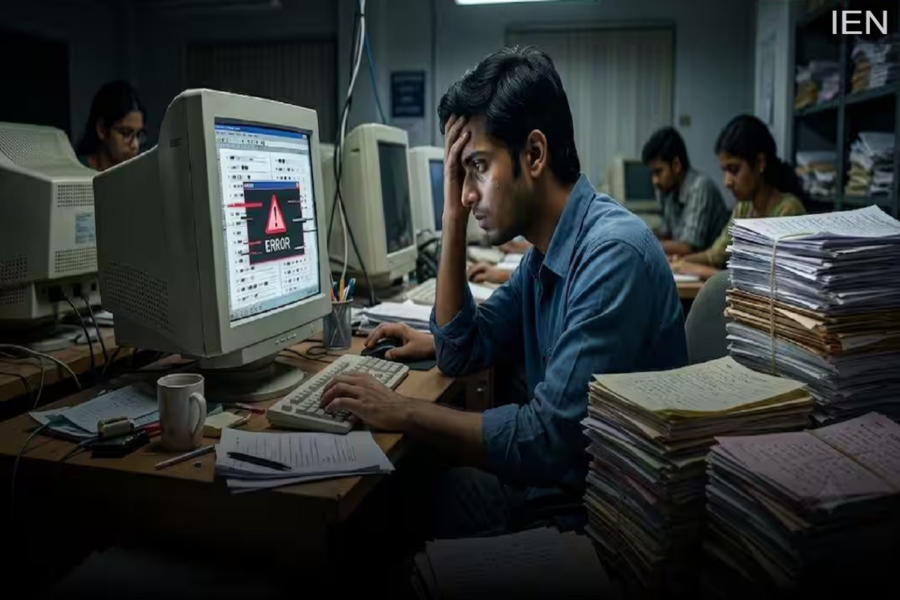
CBSE utilized the On-Screen Marking (OSM) system to evaluate Class 12 answer sheets for the 2026 examinations—a system that had been touted as being completely foolproof. Now, a technician involved in checking these answer sheets has made revelations regarding this matter that are bound to leave you stunned.
Amidst mounting questions surrounding the On-Screen Marking (OSM) system implemented for the CBSE Class 12 Board examinations, a major revelation has come to light. A technician responsible for scanning the answer sheets made several startling claims during a telephonic conversation with an ABP News reporter. It is worth noting that the ABP News reporter had posed as a Class 12 student during this conversation. This exchange has raised serious questions regarding the scanning process, the quality of the software, and the overall evaluation of the answer sheets.
The Dismal State of the Software and System
The technician described the software and hardware utilized for scanning as being of an extremely substandard quality.
- Basic Software: The system suffered from a severe lack of optimization. According to the technician, the software was so rudimentary that "even a child could have built it." The software frequently crashed and lagged.
- Fear of Data Loss:If a scanned answer sheet failed to upload successfully after the entire scanning process was complete, the previously captured data would be deleted, necessitating a complete re-scan of the entire answer sheet.
- Faulty Hardware: The scanning process relied on Logitech webcams mounted onto a fixed frame. Many of the computer systems were equipped with low-performance processors. Although each answer sheet file was saved in a size of merely a few kilobytes (KB), the systems would still frequently freeze or hang.
Who Was Scanning the Answer Sheets?
The individuals entrusted with the responsibility of uploading the students' answer sheets were not professionals.
- Freelancers and Students: The majority of the individuals performing the scanning tasks were part-time undergraduate students pursuing degrees in fields such as AI, BCA, B.Tech, or B.Com. Reading is Irrelevant: A technician stated clearly, "We are only required to scan; we certainly aren't supposed to read the answer sheets."
- Low Pay and Long Shifts: Technicians were paid a mere ₹2 per answer sheet—payment which, to date, remains outstanding. Shifts ran from 9:00 AM to 6:00 PM, followed by a second shift from 8:00 PM to 11:00 PM, with no days off. By working overtime, a single individual could scan up to 700 answer sheets per day.
Backlog and Fears of Missing Answer Sheets
- Constantly Growing Backlog: According to the technician, the backlog continued to mount due to the ceaseless influx of answer sheets. He expressed apprehension that some students' answer sheets might never have even reached the scanning stage.
- The Problem of Pending Bundles: Each bundle typically contained between 60 and 100 answer sheets. If even a single sheet within a bundle presented an issue—such as a torn page or the discovery of a cheating slip—the entire bundle would be flagged as "pending." Such bundles were subsequently sent for manual verification.
- Work Continued Post-Exams: Even after the examinations concluded on April 10, operations at the center continued until April 12. At one specific center, approximately 35,000 answer sheets were received, 10,000 of which ended up in the backlog.
Major Negligence in Quality Control
Blurred Copies Approved: Due to flaws in the quality control process, numerous blurred or illegible answer sheets were erroneously forwarded for evaluation.
Automatic Rejection: Technical glitches in the software caused many answer sheets to be automatically rejected by the system, preventing them from proceeding to the evaluation stage. Scanning a single batch took approximately 15 minutes, after which it was supposed to undergo quality control checks.
Absence of Supervision and Security Mechanisms
The technician claimed that there was absolutely no police presence or official oversight at the center.
Absence of Officials: Neither the police nor any official representatives from the CBSE visited the center to conduct inspections. The Route of the Answer Sheets: CCTV cameras were installed at the centers, and entry was restricted solely to authorized personnel. Once scanned, the answer sheets were transmitted directly to the CBSE via a server during the night for evaluation.
Utilization of Smaller Centers: Small villages and government colleges located in the vicinity of Tier-1 cities were designated as scanning centers, where the identity of the company executing this task remained unknown.
This revelation casts a significant shadow of doubt upon the CBSE's claim that the OSM system is transparent and ensures uniformity in the evaluation process.
