
CBSE: CBSE introduces new three-language system from Class 6, with two Indian languages to be taught..
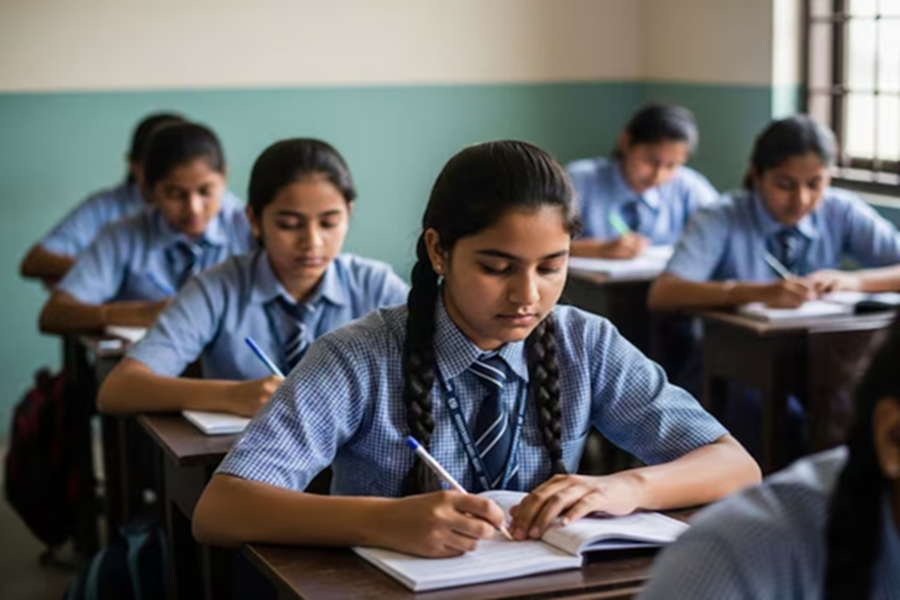
CBSE Third Language Policy 2026: This is big news for students studying in CBSE schools across the country. Starting in the 2026-27 session, the CBSE is implementing the recommendations of the National Education Policy (NEP 2020) and the National Curriculum Framework for School Education (NCFSE 2023). Under this, studying a third language will be made compulsory for students from grade 6 onwards.
What is the new rule?
According to a report in the Indian Express, under the new system, students will be required to study three languages from grade 6 onwards. At least two of these languages must be Indian. English will be considered a foreign language. This means that if a school teaches English in grade 6, it will be considered a foreign language, and two Indian languages will be required alongside it. If a school teaches another foreign language, such as French or German, as a third language, two Indian languages will also be mandatory.
The NCFSE recommends that all three languages continue until grades 9 and 10. This means that a third language could be made compulsory until grade 10. Sources indicate that students will also be required to take a third language exam in the 2031 Class 10 board exam. Currently, only two languages are tested in the board exam.
New books and the level of study will be determined.
The NCFSE has also determined the knowledge and skills students should acquire in the third language. New books will be developed accordingly. The CBSE will soon release complete information and learning materials regarding this. For the 2026-27 session, the CBSE is preparing study material in nine languages for the third language in Class 6. These will include languages such as Tamil, Telugu, Malayalam, Kannada, Gujarati, and Bengali.
Why is more time being given to the third language?
According to the NCFSE, the third language will be introduced in grades 6 to 8 (middle stage). More time will be given to learn this language, as it may be new and unfamiliar to students. The documents state that practice and time are essential for learning a third language so that students can engage in everyday conversations.
Staying Connected to Roots Through Language
NCFSE states that language education connects students to their culture, heritage, and society. India has many rich languages, each with its own literary tradition. Learning three languages will enable students to become multilingual, understand unity in diversity, and develop a strong national identity.
What will change for students?
This new rule will require students to learn an additional language. This will expand their learning horizons, but it will also provide them with an opportunity to learn new languages and cultures. This change could prove to be a major transformation in the education system in the coming years.
Disclaimer: This content has been sourced and edited from News18 Hindi. While we have made modifications for clarity and presentation, the original content belongs to its respective authors and website. We do not claim ownership of the content.
