
CBSE 3-Language Policy: Will your child also have to change their language? Education Minister clears the confusion..
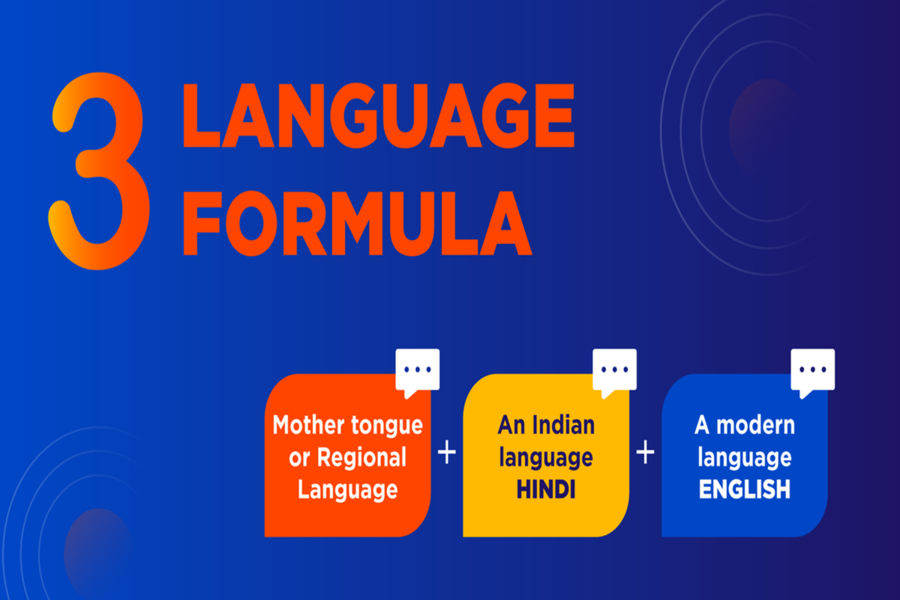
CBSE Three-Language Policy: Union Education Minister Dharmendra Pradhan has put an end to the confusion that had persisted over the past few days regarding the three-language policy in CBSE schools. The Education Minister clarified that this new rule will apply only to students enrolling in Class 6 this year. Students currently studying in Classes 7, 8, and 9 are not required to change their language subjects.
According to a *Times of India* report, Education Minister Dharmendra Pradhan acknowledged that the situation was not clear in the previous CBSE notice, leading to confusion among students and parents. This ambiguity has now been resolved. Students currently studying two foreign languages may continue with those same subjects up to the Class 10 board examinations. CBSE will soon issue a revised order regarding this, following a meeting of its governing council.
What is the R1, R2, and R3 framework?
To implement this new policy effectively, languages have been categorized into three distinct levels, known as the R1, R2, and R3 framework:
R1 (First Language): This will primarily be the medium of instruction (e.g., Hindi or English).
R2 (Second Language): This will be a language other than R1.
R3 (Third Language): This third language will be distinct from both R1 and R2.
A crucial requirement of this system is that at least two of the three chosen languages must be native Indian languages.
The change affected only 1.3% of students.
Education Minister Dharmendra Pradhan stated that under the National Education Policy (NEP) 2020, teaching three languages from Class 6 to 8 is mandatory. Approximately 90% of students in India (around 250 million) are already studying three languages. Except for Tamil Nadu and CBSE, all other state boards follow this same pattern up to Class 10. Even within the CBSE system, 99% of students are already studying two Indian languages. Only 1.3% of students were studying two foreign languages; following the new clarification, even they need not worry.
**No ban on foreign languages**
Many students and parents feared that this rule would lead to the removal of foreign languages from schools, but that is not the case. Education Minister Dharmendra Pradhan has clarified that foreign languages are not being discontinued; students may choose a foreign language as a fourth language in addition to the three main languages. The core rule simply requires that two of the three languages studied be Indian, thereby strengthening the country's own languages within the education system.
**What did the Education Minister say regarding the shortage of books and teachers?**
Following the policy's implementation, the primary concern for schools and parents revolved around the availability of textbooks and qualified teachers—an issue that had even reached the courts. Addressing this, the Education Minister assured that textbooks in the country's 22 Indian languages would be ready on time. He stated that it is CBSE's responsibility to ensure adequate teachers and necessary resources in schools; therefore, there is no cause for alarm.
Disclaimer: This content has been sourced and edited from News18 Hindi. While we have made modifications for clarity and presentation, the original content belongs to its respective authors and website. We do not claim ownership of the content.
