
Candidates take to the streets again after FMGE results; what are their key demands?
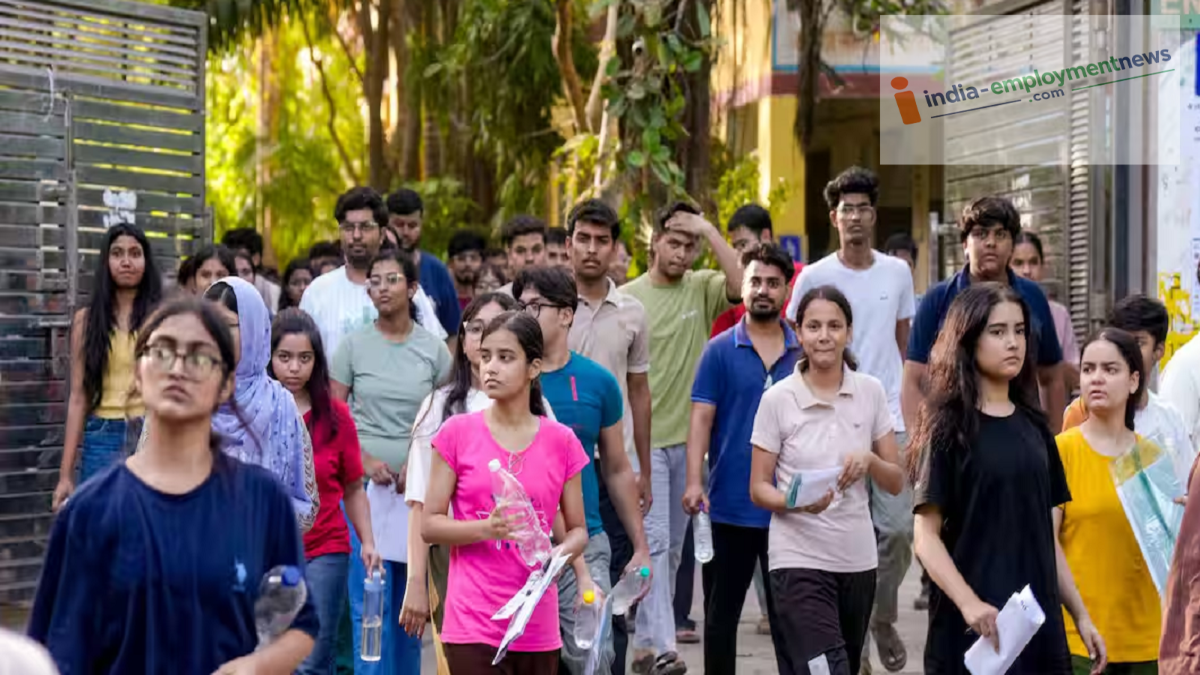
Indian medical graduates who studied at foreign medical colleges are continuously raising concerns regarding the low pass percentage, the high difficulty level of the paper, and the inclusion of video-based questions in the exam.
The controversy surrounding the June 2026 Foreign Medical Graduate Examination (FMGE) has once again spilled onto the streets of Delhi. Indian medical graduates who studied abroad are questioning the low pass percentage, the exam's difficulty, and the inclusion of video-based questions. Some candidates have now gone on a hunger strike to press for their demands. A total of 37,448 candidates appeared for the June 2026 FMGE, yet only 12.38 percent managed to pass. Protests began immediately after the results were declared on July 10. Candidates allege that the paper was unusually difficult and that video-based questions were included without providing adequate information. Additionally, complaints were raised regarding the arrangements at exam centers and the transparency of the examination process.
Protest held at Jantar Mantar on August 3
Candidates began protesting in July following the low pass percentage. The issue reached Delhi's Jantar Mantar on August 3, where representatives from the All India Medical Student Association (Foreign Medical Student Wing) and the All FMGE Organization participated in the demonstration. Following the protest, candidate representatives were invited to hold discussions with officials from the National Board of Examinations in Medical Sciences (NBEMS). Subsequently, the NBEMS constituted a three-member independent committee to address grievances related to the June FMGE. The committee was tasked with reviewing the conduct of the exam and its results. After the dialogue began, the candidates temporarily suspended their agitation, hoping that their grievances would be resolved through talks. They state that while issues such as the answer key, paper difficulty, video-based questions, exam fees, and other concerns were discussed, the demand for relief for candidates who appeared in the June exam failed to make headway.
Demand for Compensation for June FMGE Candidates
The primary demand of the protesting candidates is for compensation or some form of relief for those who appeared in the June 2026 FMGE. They argue that if changes regarding the exam are deemed necessary for the future, then candidates who took the exam this June should also be granted relief. The candidates clarify that they are not demanding to be passed without undergoing the proper process; rather, they are seeking a one-time concession or compensation. The protesters assert that the issues they have highlighted have adversely affected the performance of the June batch.
What do NBEMS and NMC say?
The NBEMS and the National Medical Commission (NMC) hold differing views regarding video-based questions. Senior NMC officials state that such questions allow for a better presentation of clinical signs and medical conditions—aspects that cannot always be accurately assessed through static images. Officials maintain that video-based questions align with medical training standards. The objective of the FMGE is to ensure that foreign medical graduates practicing in India meet the minimum required standards of competence.
Candidates' Suggestions Regarding NExT
Candidates also disagree with arguments attributing the low pass percentage to the quality of foreign medical education. They argue that if uniform competency standards are to be established for both Indian and foreign medical graduates, there should be a single, comprehensive examination for both groups. The protesting candidates have suggested the National Exit Test (NExT) as a viable option for this purpose. They believe that, in the future, NExT could facilitate a unified examination system for both domestic and foreign medical graduates.
