
Bridge vs. Flyover: What is the difference between a bridge and a flyover? There is a world of difference between the two..
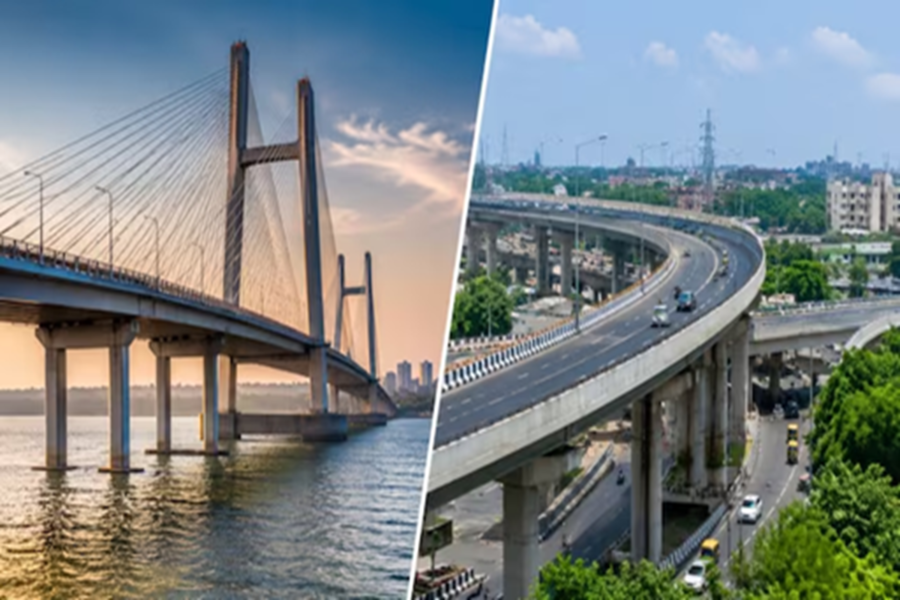
Difference Between a Bridge and a Flyover: Whenever we pass through a major city, cross a river, or travel along a busy road, we often spot elevated pathways built above them. While many people refer to these structures simply as "bridges" and others as "flyovers," did you know that the two are not actually the same? In fact, although they may appear identical at first glance, there are significant differences in their function, design, and application. Today, we will explain in very simple terms exactly what distinguishes a bridge from a flyover and where each is typically utilized.
**What is a Bridge?**
A bridge (or *pul*) is a structural entity designed to connect two distinct locations. It is typically constructed over natural features—such as rivers, valleys, lakes, or seas—to facilitate the easy movement of people and vehicles from one side to the other. With the aid of bridges, cars, buses, trains, and other vehicles are able to traverse these natural obstacles. Many major bridges span lengths of several kilometers.
**What is a Flyover?**
A flyover is an elevated roadway constructed within urban areas specifically to alleviate traffic congestion. It is also commonly referred to as an "overpass." Flyovers are typically built over busy intersections, railway lines, or densely populated districts. Their primary objective is to minimize traffic jams and make commuting easier for the public.
**What is the Difference in Design?**
Flyovers are generally shorter in length and are supported by sturdy columns or pillars. Vehicles are able to pass underneath them. Bridges, on the other hand, tend to be much longer and can stretch for many kilometers. In the case of bridges—particularly those built over rivers or seas—boats and small vessels often pass beneath the structure.
**The Purpose of Each Differs**
The primary purpose of a flyover is to reduce traffic congestion within cities. It provides an additional roadway elevated above the existing street level, thereby accelerating the flow of vehicular traffic. Conversely, the function of a bridge is to establish a connection between two locations separated by a river, a valley, or some other natural barrier.
**Where Are Flyovers and Bridges Most Commonly Found?**
You will most frequently encounter flyovers in major cities and densely populated urban areas. Cities like Delhi, Mumbai, and Lucknow feature numerous flyovers. Bridges, on the other hand, are constructed across rivers, seas, hilly terrains, and valleys. For instance, the Bandra-Worli Sea Link—built over the sea—serves as a prime example of a bridge.
**How do they impact traffic?**
Flyovers help alleviate traffic congestion. They allow vehicles to pass overhead without stopping, thereby saving time. Bridges, conversely, primarily serve the function of providing a passage. While a bridge may not necessarily reduce traffic volume, it certainly enables people to traverse natural obstacles.
**Differences in Construction and Cost**
Due to their shorter lengths, flyovers can be constructed at a relatively lower cost. However, building them within cities is often challenging due to space constraints. Conversely, constructing large bridges requires significantly more materials, time, and financial investment. Bridges built over rivers or seas, in particular, tend to be quite expensive.
**Which can bear more weight?**
Flyovers are designed primarily for road traffic; therefore, they are built to support the weight of cars, buses, and trucks. However, many bridges are engineered to withstand the weight of heavy trains, massive trucks, and even pipelines. Consequently, the load-bearing capacity of a bridge is generally considered to be greater than that of a flyover.
**Ultimately, what is the biggest difference between the two?**
Simply put, flyovers are constructed to mitigate traffic congestion within urban areas, whereas bridges are built to facilitate passage across natural barriers. Both structures serve to make travel easier for people, yet they fulfill distinct functions and address different requirements.
Disclaimer: This content has been sourced and edited from News18 Hindi. While we have made modifications for clarity and presentation, the original content belongs to its respective authors and website. We do not claim ownership of the content.
