
BBA vs. BCA: What is the difference between BBA and BCA? Which one offers a higher salary and opportunities for government jobs?
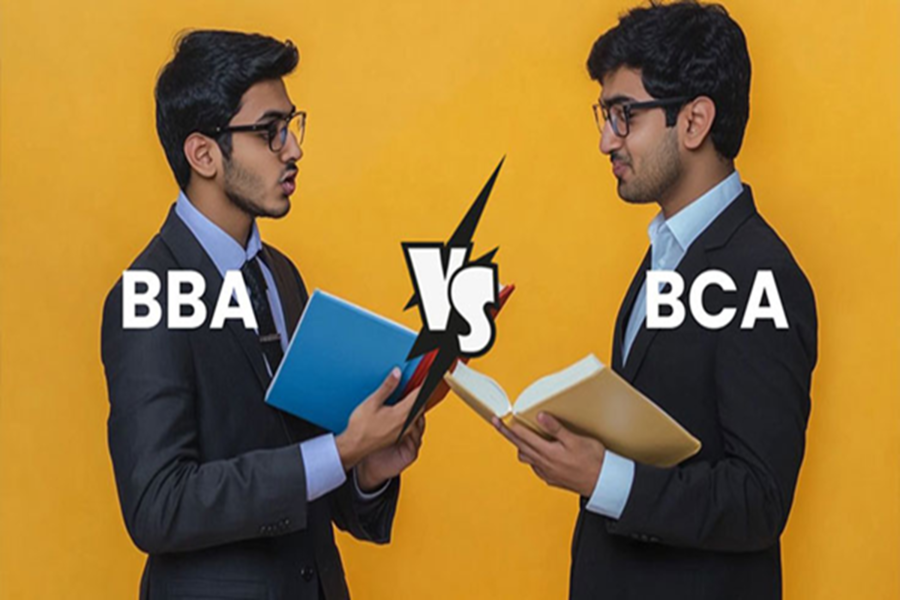
BBA vs. BCA: The Difference. After passing the 12th-grade exams, the biggest question facing every student is: "What next?" Instead of traditional courses like BA, BSc, or BCom, young people are increasingly prioritizing professional courses. Two names frequently stand out in the list of professional undergraduate courses: BBA (Bachelor of Business Administration) and BCA (Bachelor of Computer Applications). However, students are often confused about which of the two would prove better for their future.
While BBA serves as a gateway to the world of management and business, BCA offers a promising path into computer applications and Information Technology (IT). Both courses are in high demand in the corporate world, yet their nature, teaching methods, and career trajectories are vastly different. If you are torn between becoming a business leader or a coding expert, it is essential to thoroughly understand the details of both courses before enrolling.
What is the difference between BBA and BCA?
BBA (Bachelor of Business Administration): This is a three-year management degree course. It teaches the fundamentals of running a business, leading teams, marketing, finance, and human resources.
BCA (Bachelor of Computer Applications): This is also a three-year technical course, focused entirely on the world of computers. It covers subjects such as software development, coding, programming languages (like Java, Python, and C++), web designing, and database management.
BBA vs. BCA: Eligibility Criteria
A major advantage of the BBA course is that students from any stream—Arts, Science, or Commerce—can enroll after passing the 12th grade. Generally, a minimum of 50% marks in the 12th-grade examination is required. In contrast, for BCA, many universities specifically require a background in the Science stream (with Mathematics) at the 12th-grade level. However, many colleges have now started admitting Commerce and Arts students who studied Computer Science or Mathematics in Class 12.
BBA vs. BCA: Essential Skills
If you possess excellent communication skills, excel at interacting with people, have leadership qualities, and wish to understand the nuances of business, then the BBA course is perfect for you. On the other hand, if you have a logical mindset, enjoy coding for hours in front of a computer, find problem-solving engaging, and are curious about new technologies, then you should choose the BCA course.
BBA vs. BCA: Job Prospects and Career Options
After BBA: You can work as a sales executive, HR manager, marketing manager, business consultant, or financial analyst in corporate companies. Pursuing an MBA later opens up even broader career avenues.
After BCA: You can build a career in the IT sector as a software developer, web designer, system analyst, network administrator, or data scientist. You can also pursue an MCA for higher education.
BBA vs. BCA: Government Job Opportunities
Both courses open up excellent avenues for government jobs. After completing graduation, students can appear for exams conducted by the UPSC, SSC (SSC CGL), banking bodies (IBPS PO/Clerk), and the Railways. However, BCA degree holders have an added advantage; they can directly apply for technical roles such as 'System Officer' or 'IT Specialist' in government departments (like NIC, ISRO, or banks).
BBA vs. BCA: What is the starting salary package?
In any job, the salary depends entirely on the college from which you completed the course and the skills you possess.
BBA Salary: Graduates from an average college can expect a starting salary ranging from ₹3 lakh to ₹5 lakh per annum. At top management colleges, this package can range from ₹8 lakh to ₹12 lakh.
BCA Salary: Initially, one can easily secure an annual package of ₹3.5 lakh to ₹6 lakh in tech companies. If one has a strong grasp of coding, salaries in the IT sector rise rapidly.
Disclaimer: This content has been sourced and edited from News18 Hindi. While we have made modifications for clarity and presentation, the original content belongs to its respective authors and website. We do not claim ownership of the content.
