
After all, soldiers from which three castes can become the President's bodyguards?
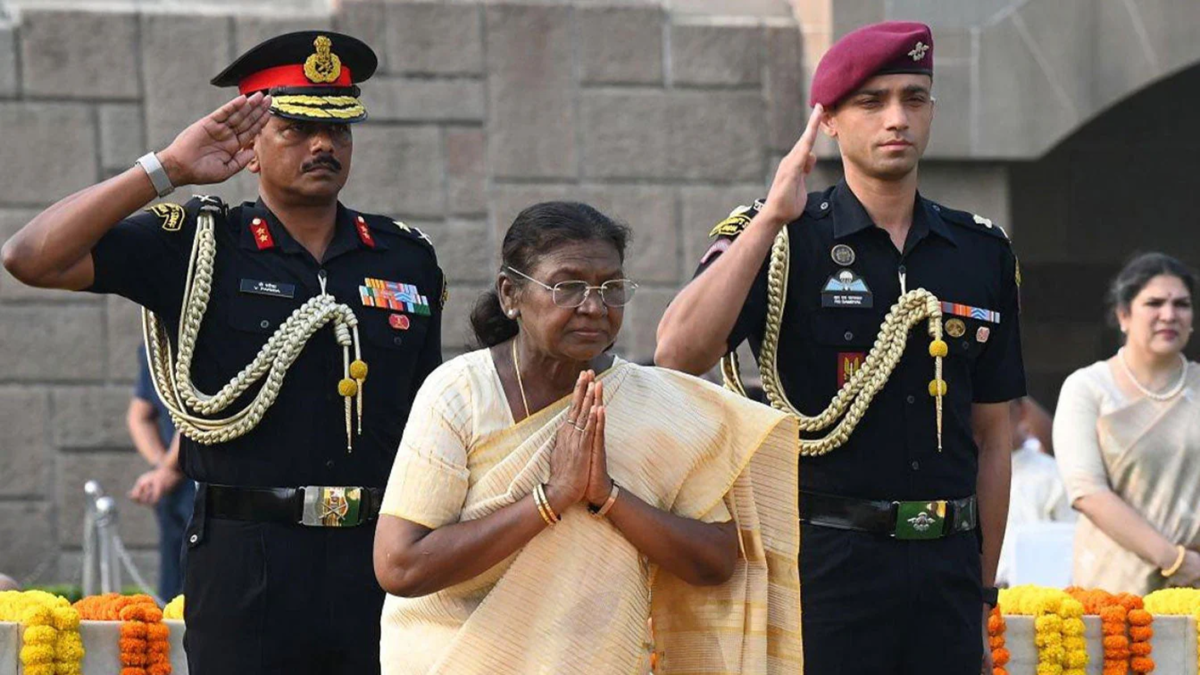
Whenever the President attends a major national ceremony, all eyes are on the security arrangements. During the 'Beating Retreat' ceremony held after Republic Day, mounted soldiers in distinctive uniforms are seen accompanying the President. These soldiers belong to the President’s Bodyguard (PBG). The PBG is distinguished by its magnificent uniforms, horses, and discipline.
The office of the President is one of the most important constitutional positions in the country; therefore, the selection of soldiers deployed for the President's security is no ordinary process. The PBG is the oldest regiment of the Indian Army. It was established in 1773 in Banaras by the then Governor-General, Warren Hastings. Initially, it comprised 50 mounted soldiers, a number that was later increased. Following India's transition to a republic in 1950, the unit was named the 'President’s Bodyguard'.
Which three communities do the President's Bodyguards come from?
A Mughal princess adorned the market, the moon made its appearance, and thus Delhi's Chandni Chowk was created.
In fact, only soldiers from the Jat, Sikh, and Rajput communities are recruited into the President’s Bodyguard. Historically, there has been a tradition of recruiting soldiers from these specific communities into the regiment. However, selection for the PBG is based on exceptional physical attributes, military competence, and a rigorous selection process. In other words, becoming a President’s Bodyguard is not merely a matter of belonging to a specific community; a soldier must meet several stringent standards. This is why the PBG is counted among the elite and special units of the Indian Army.
Height alone is not enough
Physical capability is crucial for soldiers joining the PBG. Soldiers with tall stature and a robust physique have traditionally been considered suitable for this role. However, a soldier is not appointed as a President’s Bodyguard based on height alone. Fitness, horsemanship, and military aptitude play a crucial role in the selection process. According to official information from Rashtrapati Bhavan, soldiers selected for the PBG must possess specific physical attributes and undergo a rigorous physical selection process.
**Proficient in Combat Skills**
It would be incorrect to view the PBG merely as a ceremonial unit. In addition to being experts in horsemanship, its soldiers are trained as paratroopers and armored warriors. Officially, the PBG’s role encompasses both ceremonial duties involving the President during peacetime and participation in military operations when required. Consequently, the responsibilities of the President's Bodyguard extend far beyond simply accompanying the President or participating in parades; these soldiers are prepared for any contingency.
**A Glorious Tradition Dating Back to 1773**
The history of the PBG spans nearly two and a half centuries. Established in 1773, the unit was originally known as the 'Governor-General’s Bodyguard.' It was later designated the 'Viceroy’s Bodyguard,' and following India's transition to a republic, it was renamed the 'President’s Bodyguard' on January 27, 1950.
Today, the PBG is the oldest regiment in the Indian Army and is regarded as the President's own military unit. Its distinctive uniform, exceptional horsemanship, and magnificent parade traditions set it apart from other Army units.
Disclaimer: This content has been sourced and edited from News18 Hindi. While we have made modifications for clarity and presentation, the original content belongs to its respective authors and website. We do not claim ownership of the content.
