
15 Things Every Student Should Know About August 15
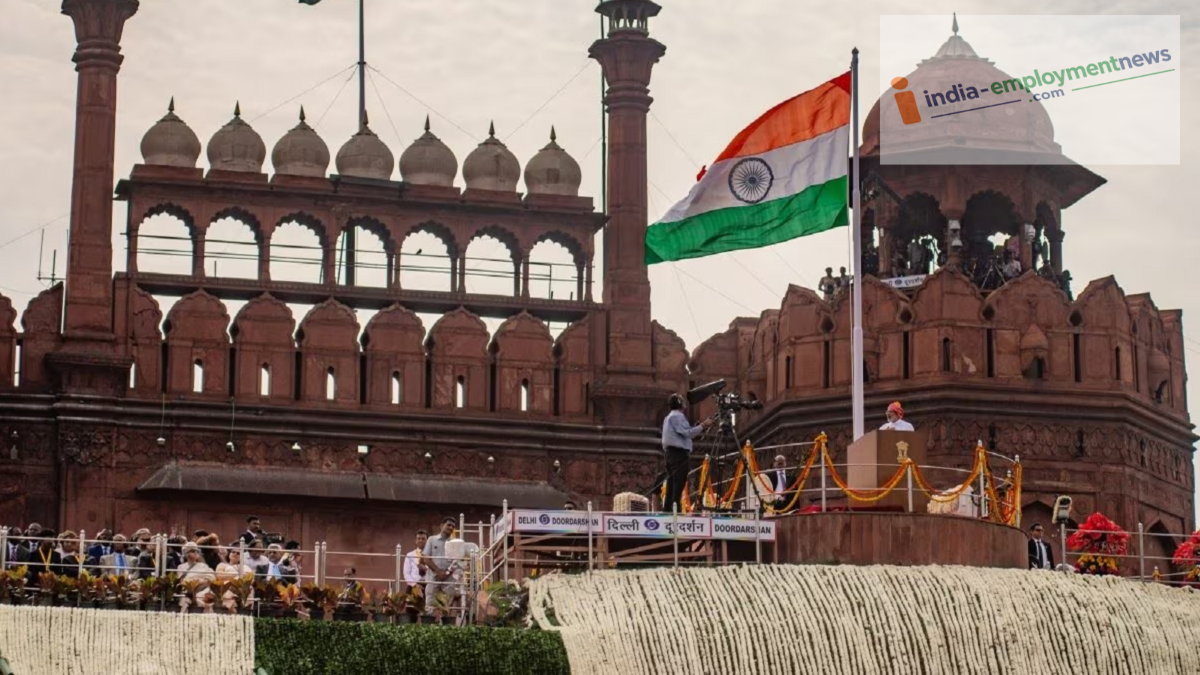
In 2026, India is celebrating its 80th Independence Day. This day of freedom is not merely a historical date; it serves as a reminder of the long-drawn freedom struggle, the sacrifices made, and the political conflicts involved.
Independence Day 2026: Independence Day is celebrated every year on August 15. The country gained freedom from British rule on August 15, 1947. This day of freedom is not merely a historical date; it serves as a reminder of the long-drawn freedom struggle, the sacrifices made, and the political conflicts involved. This year—2026—India is celebrating its 80th Independence Day. Let us share some facts about Independence Day that every student preparing for exams like SSC, UPSC, CUET, NDA, and State PCS should know.
1. India gained independence on August 15
India attained freedom from British rule on August 15, 1947. The Indian Independence Act of 1947 designated August 15 as the 'Appointed Day' for independence. Under this Act, two independent dominions—India and Pakistan—came into existence. The date of August 15 was not chosen arbitrarily; Lord Mountbatten, India's last Viceroy, personally selected it. It marked the second anniversary of Japan's surrender to the Allied forces in World War II (1945). For him, it symbolized the victory of peace over conflict, making it a fitting date for the birth of an independent India.
2. India did not become a republic immediately
India did not become a republic immediately after gaining independence on August 15, 1947; at that time, it was a dominion. It was only later, with the implementation of the Constitution on January 26, 1950, that India became a republic. This is why Independence Day and Republic Day commemorate two distinct historical events.
3. When was the Constitution adopted?
The Constituent Assembly adopted the Indian Constitution on January 26, 1949; however, it came into effect on January 26, 1950. On this day, India became a full-fledged republic.
4. First Prime Minister of Independent India
Jawaharlal Nehru became the first Prime Minister of independent India. He delivered his famous "Tryst with Destiny" speech during a special session of the Constituent Assembly at midnight on August 14–15, 1947. This speech is counted among the most celebrated speeches associated with the historic moment of India's independence.
5. The Freedom Struggle of 1857
The revolt of 1857 is considered the first major uprising against British rule. Civilians and rulers from various regions joined the soldiers in this rebellion. This uprising of 1857 is known as the First War of Independence.
6. Establishment of the Indian National Congress
The Indian National Congress was established in 1885. Dadabhai Naoroji was one of the founding members of the Congress and a key early leader of the Indian nationalist movement. Subsequently, the Congress emerged as one of the principal political platforms of the freedom movement.
7. Swadeshi Movement
The Swadeshi Movement gained significant momentum following the Partition of Bengal in 1905. This movement emphasized the use of Indian-made goods and the boycott of British products.
8. When did Mahatma Gandhi return to India?
Mahatma Gandhi returned to India from South Africa in 1915. Thereafter, he made public participation, non-violence, and civil resistance key instruments of his political struggle.
9. Salt Satyagraha
Mahatma Gandhi launched the Civil Disobedience Movement in 1930. During this period, the Dandi March took place—an event that ranks among the most significant in the freedom movement. Gandhi marched from Sabarmati Ashram to Dandi and challenged the British salt laws.
10. Quit India Movement
The Quit India Movement took place in August 1942. The "Quit India" resolution was adopted on August 8, 1942, at a meeting of the All India Congress Committee held in Bombay. During this movement, Mahatma Gandhi also issued the call of "Do or Die."
11. When was the national flag adopted?
Few people are aware that India's current national flag was adopted by the Constituent Assembly on July 22, 1947—meaning the Tricolour was adopted just a few weeks before independence. The flag features saffron, white, and dark green bands, with a blue Ashoka Chakra in the center of the white band.
12. The National Emblem: Ashoka Chakra
The Ashoka Chakra at the center of the national flag has 24 spokes. It is derived from the *Dharma Chakra* (Wheel of Law) depicted on the abacus of the Lion Capital of Ashoka at Sarnath. The ratio of the flag's width to its length is 2:3. Additionally, the design of the national Tricolour is considered to be based on the work of Pingali Venkayya; he had presented a flag design to Gandhi in Vijayawada in 1921.
13. Who hoists the flag at the Red Fort?
On August 15, the Prime Minister hoists the national flag at the Red Fort in Delhi and addresses the nation. The Independence Day ceremony includes a ceremonial guard, a national salute, and a 21-gun salute. The tradition of hoisting the flag at the Red Fort on Independence Day dates back to the time of Jawaharlal Nehru.
14. The National Anthem Came Later
Many people believe that the national anthem was created when India gained independence in 1947, but this is not the case. Rabindranath Tagore had written the national anthem decades earlier, yet it was officially adopted on January 24, 1950—on the eve of India becoming a republic. Until then, independent India did not have a national anthem.
15. Freedom Fighters
The freedom India enjoys today is the result of the hard work and sacrifices of numerous freedom fighters. Among these were great figures such as Mahatma Gandhi, Bal Gangadhar Tilak, Subhash Chandra Bose, Bhagat Singh, Sardar Vallabhbhai Patel, Jawaharlal Nehru, Chandrashekhar Azad, Lal Bahadur Shastri, Dr. Rajendra Prasad, Gopal Krishna Gokhale, Annie Besant, Dadabhai Naoroji, Mangal Pandey, Rani Lakshmi Bai, Sarojini Naidu, and B.R. Ambedkar.
