
RBI MPC Meeting Begins Today: Will EMIs Get Relief or Will FD Investors Benefit? Key Expectations Explained
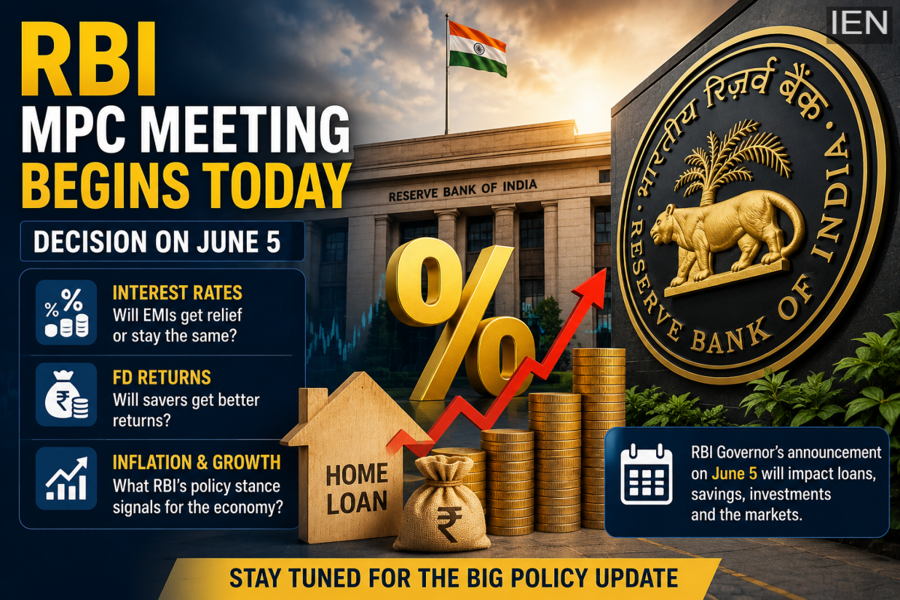
All eyes are on the Reserve Bank of India (RBI) as its three-day Monetary Policy Committee (MPC) meeting commenced on June 3. The outcome of this crucial policy review, scheduled to be announced by RBI Governor Sanjay Malhotra on June 5, could influence everything from home loan EMIs and fixed deposit returns to stock market sentiment and the broader economic outlook.
While most economists expect the central bank to keep interest rates unchanged, investors and borrowers are closely monitoring the RBI’s commentary on inflation, economic growth, crude oil prices, and the weakening Indian rupee.
Why This RBI Policy Meeting Matters
The June 2026 MPC meeting comes at a time when both the domestic and global economy are facing multiple challenges.
Several key factors are shaping the policy landscape:
Rising Geopolitical Risks
Tensions in West Asia continue to create uncertainty across global financial markets. Ongoing conflicts in the region have increased concerns about energy supplies and economic stability worldwide.
Crude Oil and Energy Prices Under Pressure
International crude oil and natural gas prices have been moving higher due to geopolitical developments. Since India imports a significant portion of its energy requirements, rising fuel costs can directly affect inflation and economic growth.
Weakening Rupee and Supply Chain Concerns
The Indian rupee has come under pressure against the US dollar, while global supply-chain disruptions continue to impact trade and manufacturing activities. A weaker currency can increase import costs, particularly for fuel and essential commodities, adding further inflationary pressure.
These developments have made the June policy review one of the most closely watched RBI meetings in recent months.
Repo Rate Likely to Remain Unchanged
According to market consensus, the RBI is expected to maintain the benchmark repo rate at 5.25%.
A survey conducted among economists, treasury experts, and fixed-income professionals suggests that the central bank is unlikely to alter interest rates immediately despite concerns about inflation and currency volatility.
The focus instead may shift toward the RBI's policy tone and future guidance.
Many analysts believe the central bank could retain its neutral stance while delivering a more cautious message regarding inflation risks and external economic uncertainties.
What It Means for Loan Borrowers
If the RBI keeps the repo rate unchanged, most borrowers are unlikely to see any immediate reduction in loan EMIs.
Home loan, auto loan, and personal loan customers who were hoping for another rate cut may have to wait longer for additional relief.
However, the absence of a rate hike will also come as a positive development, as existing borrowers can continue servicing loans at current interest levels without facing higher repayment burdens.
What FD Investors Should Expect
Fixed Deposit investors are also watching the policy outcome carefully.
If interest rates remain unchanged, banks are likely to maintain existing FD rates in the short term. This could be beneficial for savers who are currently enjoying relatively attractive deposit rates.
However, market participants will closely monitor RBI's future inflation outlook because any shift toward a tighter monetary stance could influence deposit and lending rates later in the year.
Experts Expect a More Hawkish Tone
Several economists believe that although policy rates may remain unchanged, the RBI's language could become more cautious due to emerging inflation risks.
Inflation Concerns Are Growing Again
Consumer inflation currently appears manageable, but rising wholesale inflation and increasing fuel costs are creating fresh concerns.
Economists suggest the RBI may revise its inflation forecast upward to reflect:
-
Higher energy costs.
-
Global commodity price volatility.
-
Import-driven inflation due to rupee weakness.
At the same time, the central bank could slightly lower its economic growth projections if global uncertainties continue to weigh on business activity.
Rupee Likely to Dominate Discussions
One of the biggest concerns during this MPC meeting is expected to be the performance of the Indian rupee.
The domestic currency has reportedly weakened by more than 6% during 2026, marking one of its poorest annual performances in over a decade.
A weaker rupee can:
-
Increase import costs.
-
Push up fuel prices.
-
Add pressure on inflation.
-
Affect foreign investor sentiment.
As a result, markets are eager to understand how the RBI plans to stabilize the currency and manage volatility in the foreign exchange market.
Analysts believe the central bank could continue using foreign exchange reserves and other liquidity-management tools to support the rupee if necessary.
Inflation and Growth Forecasts May Be Revised
Several economists expect the RBI to revise its macroeconomic projections.
Potential changes may include:
-
Inflation forecast moving closer to 5%.
-
GDP growth projections being reduced slightly.
-
Greater emphasis on external risks and energy costs.
These revisions would provide important clues about the RBI's policy direction over the coming quarters.
What Should Borrowers and Investors Watch on June 5?
Even if the repo rate remains unchanged, the Governor's statement could significantly influence financial markets.
Key areas to monitor include:
-
Inflation projections.
-
GDP growth outlook.
-
RBI's stance on future rate changes.
-
Comments on crude oil prices.
-
Measures to support the rupee.
-
Liquidity management strategy.
For home loan borrowers, FD investors, and market participants, the policy announcement may offer valuable insights into the direction of interest rates for the rest of the financial year.
Bottom Line
The June 2026 RBI MPC meeting is expected to deliver stability rather than surprises. Most experts anticipate that the repo rate will remain at 5.25%, keeping EMIs and FD rates largely unchanged for now. However, with inflation risks resurfacing, crude oil prices climbing, and the rupee under pressure, the RBI's commentary may be more important than the rate decision itself.
Investors and borrowers should pay close attention to the central bank's outlook, as it could provide early signals about future monetary policy moves and their impact on loans, deposits, and the broader economy.
